
Commercial furniture marketing should give each decision-maker the information and next step needed to move a project forward. A designer needs dimensions and finishes. A dealer needs a clear project fit. A workplace leader needs the space to support employees. Procurement needs a defensible comparison.
Build a path from a specific room-planning question to usable product information, a relevant sample or configuration request, and a sales conversation with context.
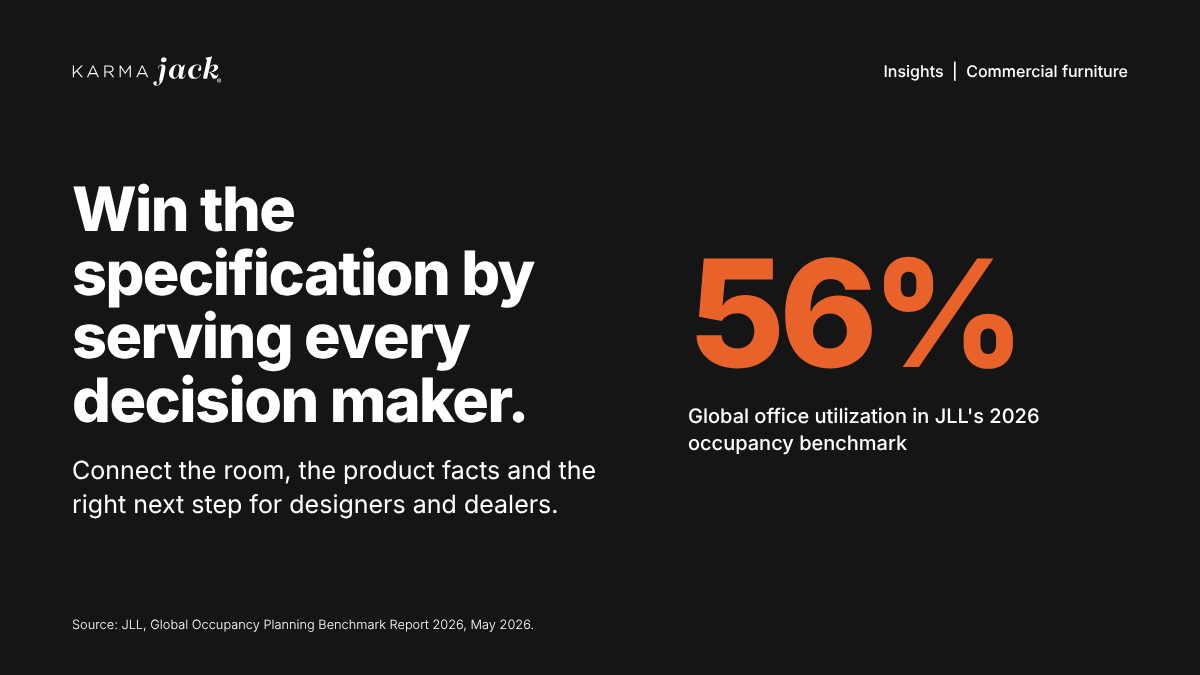
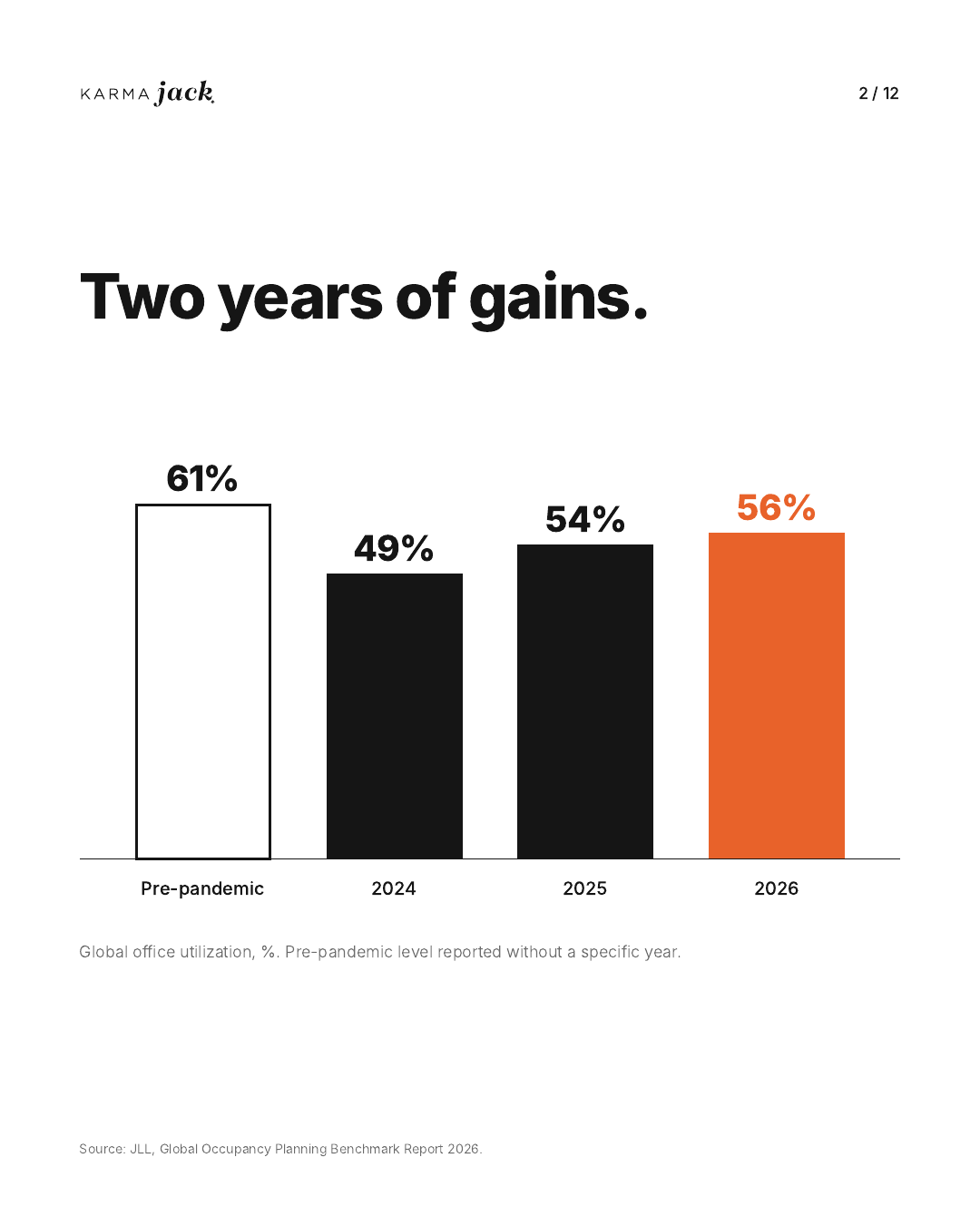
Use workplace trends to choose a useful application
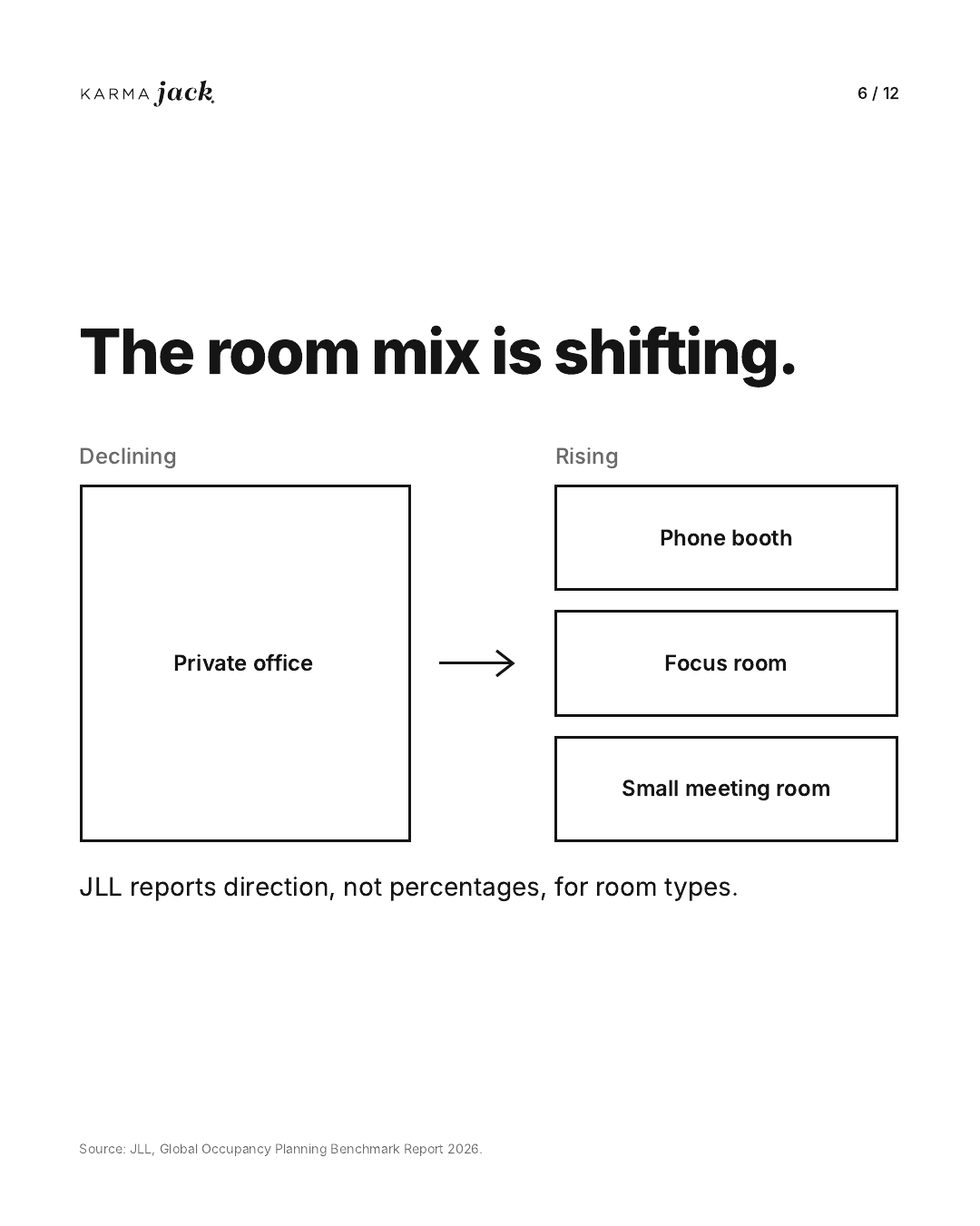
The report also says phone booths, focus rooms and small meeting rooms are rising as private offices decline. Use that context to investigate which room-planning questions your products can help answer.
Ask dealers which room types are generating discussions, which questions slow specifications and which products have a realistic commercial opportunity. Then choose an application your business can serve.
Build a campaign around the room and the decision
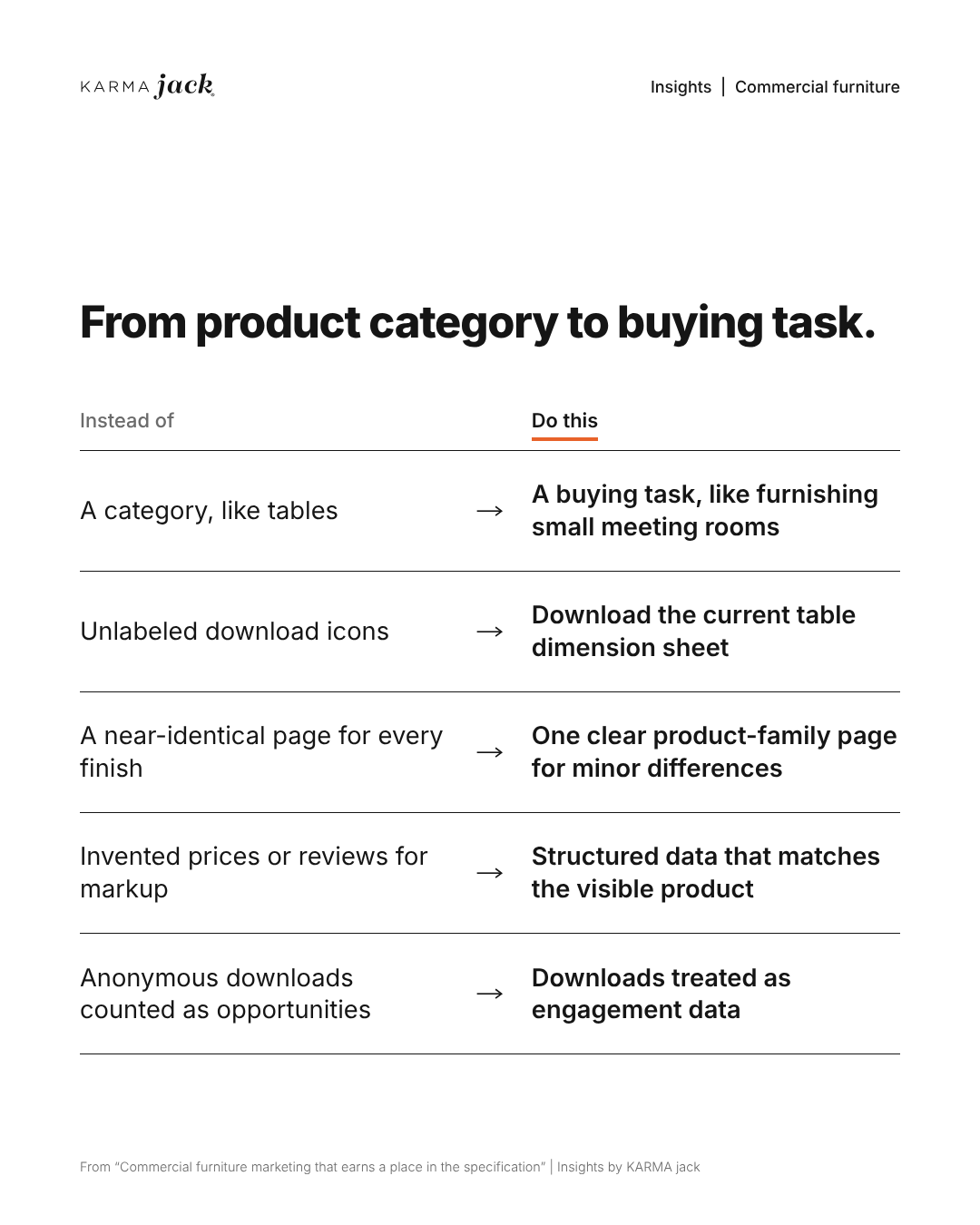
“Tables” is a category. “Furnishing small meeting rooms across several offices” is a buying task with specific requirements.
A proposed campaign for that task could connect suitable tables with room layouts, dimensions, approved power configurations, finish choices and current specification files. Show which illustrations depict standard products and which depict proposed configurations.
A short installation video can help a dealer explain the system, provided the depicted work and claims are approved.
Illustrative search themes include “commercial small meeting room tables” and “office meeting tables with integrated power.” Validate their demand and actual wording before buying traffic or creating dedicated pages. No search-volume claim is implied here.
Give the campaign one useful action, such as requesting configuration help. Keep an ungated specification download available for someone who is still comparing.
Make product pages ready for human and AI-assisted research
A designer may arrive with a precise question: “Which of these tables supports the room size and power arrangement in this plan?” Put the answerable product facts near the product, in readable text with consistent units.
Keep dimensions, available configurations, compatibility notes and current finishes together. Link the full technical file with its revision date.
For configurable furniture, decide which differences need a distinct page and which belong in one clear product-family page. Avoid creating a near-identical page for every finish.
Google explains canonicalization, the ways to signal which URL is the preferred version, for duplicate or very similar URLs; ask the web team to assess your actual catalog before choosing a treatment. [2]
Use descriptive links between an application page, suitable products, specification resources and a relevant installation. Check that a visitor can follow that route on a phone.
A thumbnail or an unlabeled download icon gives far less context than “Download the current table dimension sheet.”
Google’s AI guidance says there is no special AI schema requirement. Useful content and technical eligibility still matter. [3] Any structured data you implement should accurately describe the visible product or article.
Do not add invented prices, reviews or availability to satisfy a markup template.
A useful answer page might explain what to confirm before specifying integrated power: the actual available options, documentation and questions for the project’s qualified design team. Keep electrical and accessibility claims within verified product information.
A specific answer like this gives a buyer something to use.
Give designers and dealers different next steps
Match the action to the work underway:
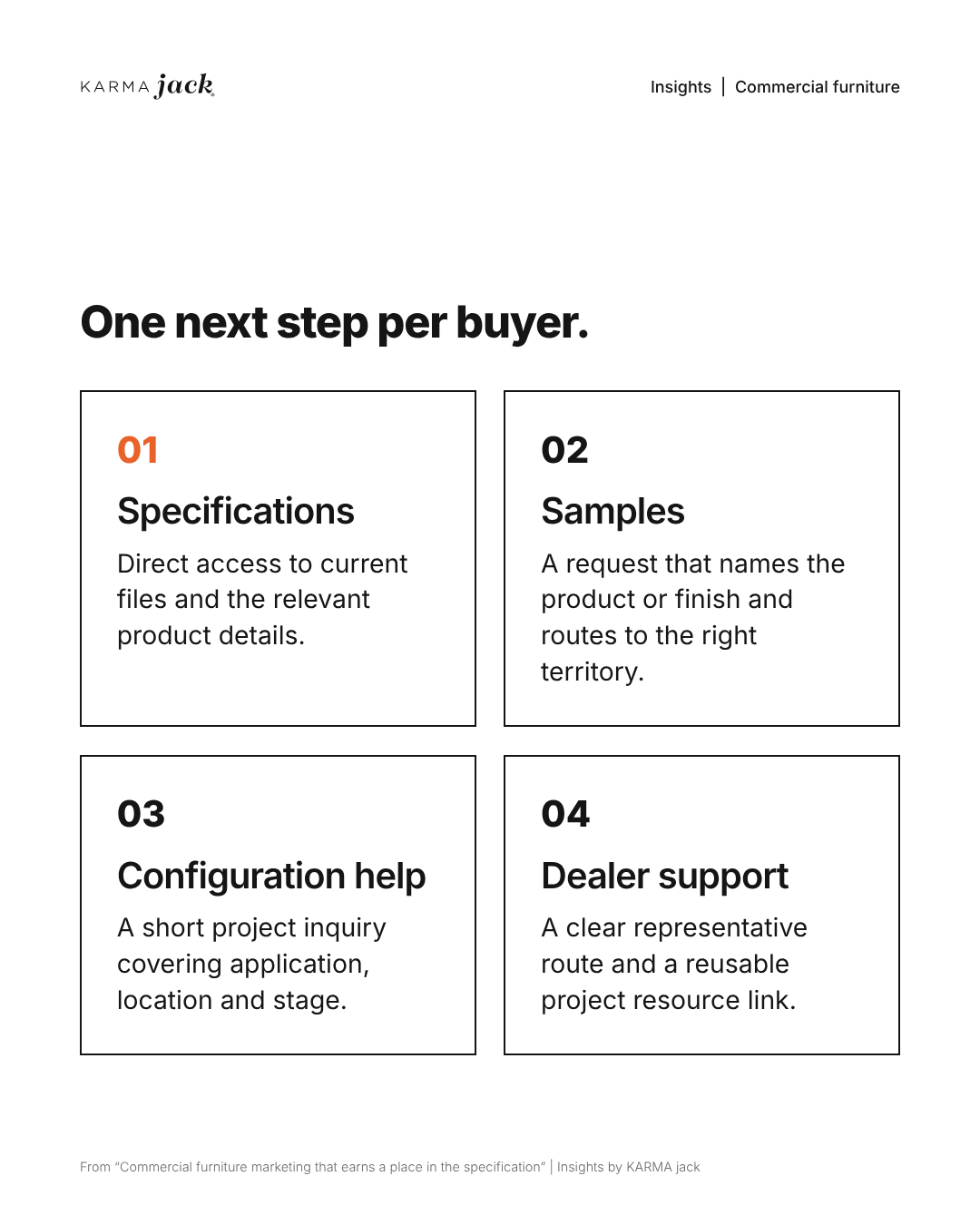
- Specifications: direct access to the current files and relevant product details.
- Samples: a request that identifies the product or finish and routes to the right territory.
- Configuration help: a short project inquiry with application, location and stage.
- Dealer support: a clear representative route and a reusable project-resource link.
The site should carry the product family or application into the inquiry. Do not make the recipient ask again which table the buyer was viewing.
Have a real person test the sample and project routes on mobile, including the confirmation and internal handoff. Set a response expectation only after the team agrees it can deliver it.
Make search and account campaigns reinforce the specification path
Give each paid-search test a clear job:
- Separate product-intent queries from broader planning topics.
- Review search terms for consumer furniture, jobs and products you do not supply.
- Send each relevant query to its matching application or product page.
For account-focused campaigns, choose a distinct audience and purpose. A dealer campaign might promote the specification resource. A workplace-leader campaign might introduce the small-room planning guide. Verify actual platform targeting and audience availability before building the plan around them.
Use approved installation photographs, close-ups and short demonstrations. Explain a feature the audience must evaluate: how a component connects, which configuration is shown or what changes between layouts. Secure permission for customer spaces, drawings and contributor credits.
Measure whether marketing helps projects advance
Connect the originating page and campaign to your CRM (customer relationship management system). When known, record product family, buyer role, territory and project stage. Review distinct outcomes:
- Downloads and samples show different levels of interest.
- Project inquiries and accepted opportunities need agreed sales definitions.
- Quoted projects show whether the specification conversation is advancing.
Bing’s October 2026 Topics Portfolio beta can help identify themes in AI citations when a site has enough data. Its categories and estimates are approximate. Review any suggested topic against real dealer questions before turning it into content. [4]
Do not apply an industry-wide percentage promise to your website. Establish your own baseline by product family and buying action. Compare relevant inquiries and sales progression over comparable periods, while accounting for seasonality and changes in campaign spending.
Run one product family through the whole journey
Have a product specialist confirm the current files and configurations, a dealer representative test the handoff, and marketing build the application-to-product path. Before promoting it, ask someone unfamiliar with the catalog to find dimensions, choose the right next step and submit a test request on a phone. Record what they could not find.
Use a project record with product family, territory, buyer role, requested action, routing owner and next step. Connect a sample request, dealer referral and later quote when they concern the same project. Treat anonymous downloads as engagement data. Do not count them as sales opportunities.
Review requests with the dealer or sales owner. Repeated questions about the same power option indicate a content gap. Requests sent to the wrong territory indicate a routing problem. Many consumer inquiries indicate an audience or search-term problem. Each calls for a different fix.
Measure accepted project inquiries as a share of valid project inquiries, with counts and a consistent definition. Follow sample-to-project progression separately and allow for the specification cycle. A higher download count alone is not a reason to increase spending. This is a proposed pilot method. It is not an industry benchmark.
Commercial furniture marketing FAQs
Should designers, dealers and project buyers all use the same form?
Give each a useful route: current specifications, product or finish samples, configuration help or dealer support. Carry the product family, territory and project context into the handoff where relevant.
Does every furniture finish need its own web page?
Assess whether the variation offers genuinely distinct information. Many configurations can belong on a clear product-family page. Have the web team review duplicate URLs and the actual catalog before choosing canonicalization or redirects.
Does a specification download count as a sales opportunity?
Treat anonymous downloads as engagement. Define accepted project inquiries with sales and connect related sample requests, dealer referrals and quotes to one project. Follow progress over the specification cycle.
Start with one product family
KARMA jack’s website work starts with goals, buyer journeys and conversion points before design and development. Its AI search optimization service checks crawl access, indexing signals and page content. [5] For a furniture manufacturer, those capabilities can connect the application story, specification experience and sales handoff.
Start with one product family and one buying task. Build the complete path, then use actual project conversations to improve it. Let’s talk strategy.
