
AI for HVAC reviews can support consistent requests, draft replies and help staff sort feedback. Set neutral invitation rules, human review and service follow-up before choosing the software.
AI can support a more consistent review process by drafting requests, organizing feedback and preparing replies. The customer still supplies the experience and the opinion. Your team remains responsible for what the business publishes.
An HVAC owner should make three decisions before buying review software: which completed jobs receive an invitation, who approves public responses and who fixes recurring service problems. Build those rules first, then use AI to reduce drafting and sorting work without manufacturing customer proof.
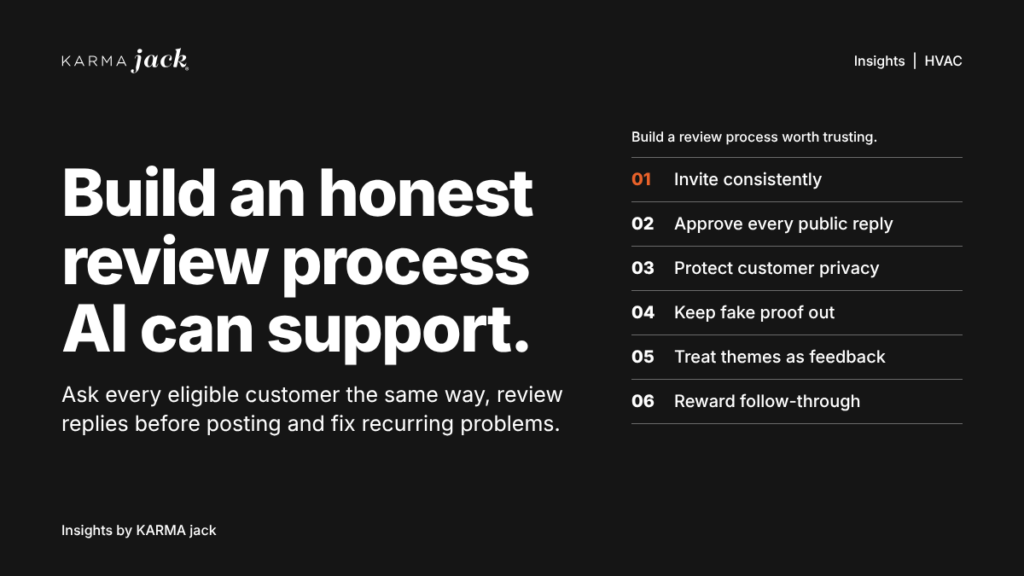
Ask for honest feedback consistently
Choose a standard moment after completed service to invite feedback. Use the same neutral approach for eligible customers rather than sending a public review link only to people who first report a positive experience.
A request can be simple: “Thank you for choosing our team. If you would like to share your experience, you can leave a review here.”
Use the correct business review link, respect communication preferences and avoid repeated pressure. Do not ask for five stars, specify what the customer should write or make an employee’s reward depend on a named review.
Google’s review policies prohibit incentives for reviews and selective solicitation of positive reviews. Keep private service recovery available without using it to divert unhappy customers away from public feedback.
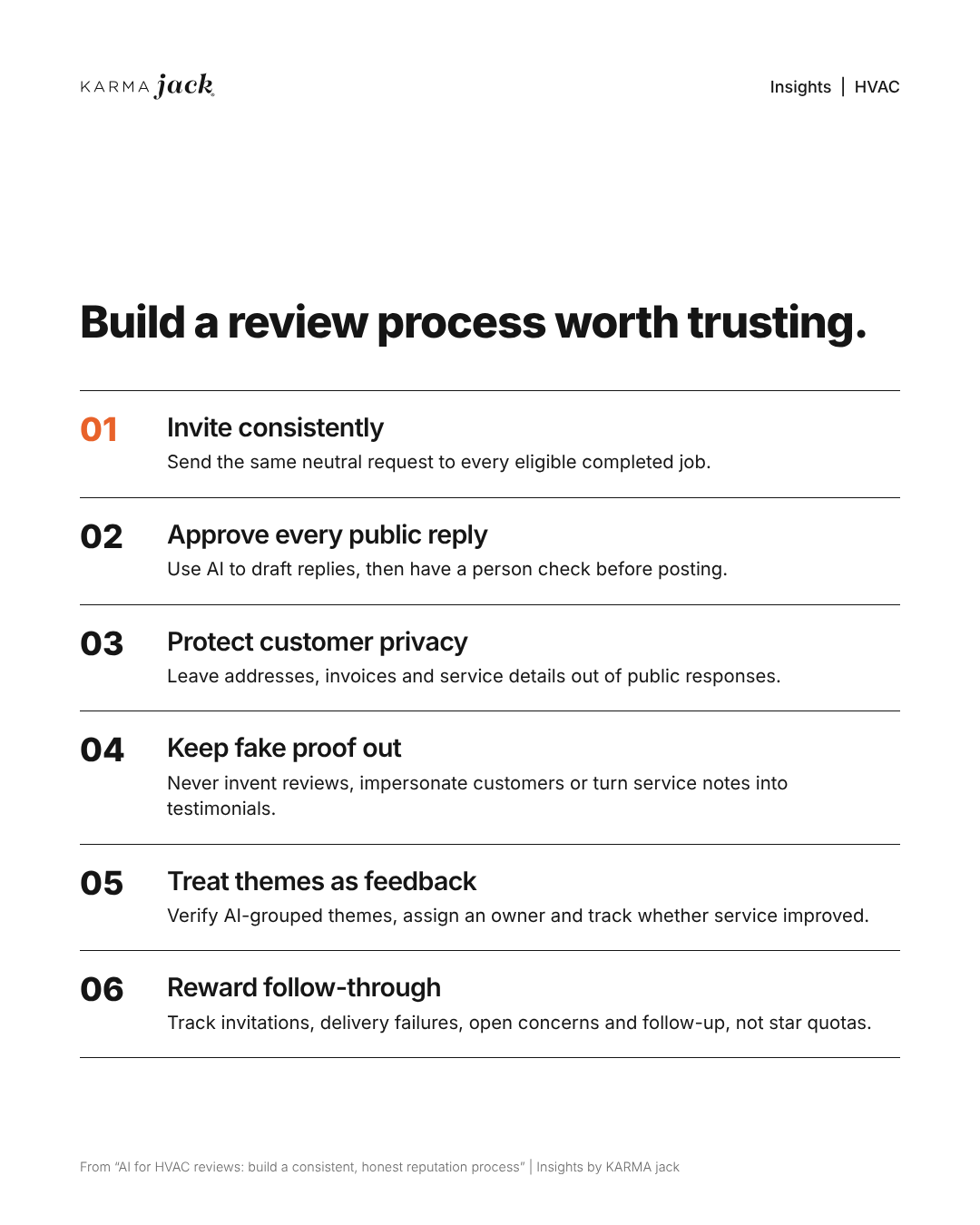
Use AI to assist your team
AI can turn your approved request into a short message, suggest a reply based on a review or group recurring themes for management. A person should check the output before it goes public.
A useful response is relevant to what the customer actually said. For a positive review, a brief thank-you may be enough. For a complaint, acknowledge the concern and provide an appropriate way to continue privately.
Do not add details from a service record to prove your side in public. Addresses, payment issues, household information and employee allegations do not belong in a routine response.
Give the reviewer a path to help without promising a refund, warranty exception or specific outcome that has not been approved.
Use a complaint response that protects privacy
Example for adaptation: “Thank you for raising this. We would like to understand your concern. Please contact our office using the number on our website and ask for the person handling customer feedback. We can review the details with you privately.”
- Before posting, confirm that the contact route is correct and someone owns the follow-up. Do not add an address, invoice detail, diagnosis of the equipment or an accusation about the reviewer. Avoid saying the team called or resolved the matter unless that actually happened.
- For the internal record, capture the review URL, date, concern, assigned owner and next action. Keep customer details in the approved service system. Track whether the owner followed up; do not pressure the customer to remove a review as a condition of help.
Keep fake proof out of the process
Never ask a tool to invent customer reviews, write as a customer who does not exist or turn an internal service note into a public testimonial.
The FTC’s Rule on the Use of Consumer Reviews and Testimonials took effect October 21, 2024. Its questions and answers explain the treatment of fake reviews, sentiment-conditioned incentives and other deceptive practices. Platform policies can be stricter than the legal rule. Follow both.
If you reuse a genuine review in advertising, check permission, context and applicable disclosure requirements. Do not edit a statement until it implies a result the customer never reported.
Treat review themes as operating feedback
A growing review count is useful context, but recurring problems deserve more attention than the count alone.
Look for patterns such as missed arrival updates, confusing estimates or strong communication from technicians. Confirm the context before treating an AI summary as fact. A small number of comments may not represent the whole customer base.
Assign a person to investigate themes and report what changed. A review program should help improve service as well as describe it.
Turn a recurring complaint into a service improvement
Give the service manager a monthly review summary that includes the original public review links, the number of distinct comments in each theme and the period covered. Use AI to suggest categories, then have a person check every comment behind a proposed operational change. One lengthy complaint should not become several customers in a summary.
For example, suppose several reviews mention uncertainty about arrival times. Check the dispatch process before changing the marketing. Does the customer receive an accurate appointment window? Who sends an update when a technician is delayed? Can dispatch see whether the update was delivered? Assign the process change to dispatch, give it a review date and track later complaints about the same issue. This is an illustrative investigation, not a claim about any contractor.
Keep the review request independent of that investigation. Service recovery should happen because the customer needs help, whether or not they revise a public review.
Be careful with search claims
Google says review volume and positive ratings can help local ranking as part of how well known a business is. Its local ranking guidance also describes relevance and distance.
That does not mean a particular review cadence guarantees a map ranking or an AI recommendation. Different systems use different sources, and their outputs can change. Keep your public claims focused on genuine customer feedback rather than promises to influence an algorithm.
Use a reputation scorecard that rewards follow-through
Use a reputation scorecard with these measures:
- Eligible completed jobs
- Invitations delivered
- Delivery failures
- Public reviews received
- Replies awaiting approval
- Unresolved service concerns
Define eligible jobs using neutral operational rules and communication permissions, never expected star rating. Separate requested reviews from reviews that arrive without an invitation; do not claim the campaign caused every new review.
Check a sample of invitations each month against the completed-job list. This catches workflows that quietly exclude complaints or repeat customers without an approved reason. Check that each branch uses its own verified destination and that an opt-out stops the relevant messages.
Measure how long a concern waits for an owner and whether the promised follow-up happened. Review volume and average rating are context, not employee quotas. Do not promise ranking gains from a target review count. If the program produces more reviews while unresolved complaints grow, improve the service response before increasing message volume.
Build a process you can stand behind
Start with one neutral request, one verified review link and one person responsible for approving replies. Track delivery problems, response time, feedback themes and follow-through.
For broader support connecting reputation with your marketing, talk with KARMA jack. A strong reputation starts with the experience customers actually receive.
Questions HVAC owners ask
Can AI write customer reviews?
It should not impersonate customers or manufacture experiences. Use it for the business’s drafts and analysis, with human review.
Can we offer a discount for an honest Google review?
Google prohibits review incentives, including discounts. Do not make the offer.
Should we ask only happy customers?
No. Use a neutral, consistent process rather than filtering invitations based on expected sentiment.
What should an HVAC complaint reply leave out?
Leave out addresses, invoice details, private service records and unverified accusations. Acknowledge the concern and give a verified route to someone who owns follow-up, without promising an unapproved remedy.
How can AI review summaries guide a service improvement?
Have a person verify the original comments and count distinct customers before acting on a theme. Investigate the relevant process, assign an owner and review later feedback. A long complaint should not become several customers.
What belongs in a reputation scorecard besides star ratings?
Track eligible completed jobs, delivered invitations, delivery failures, reviews received, replies awaiting approval and unresolved service concerns. Use neutral eligibility rules and keep unprompted reviews separate from campaign results.

