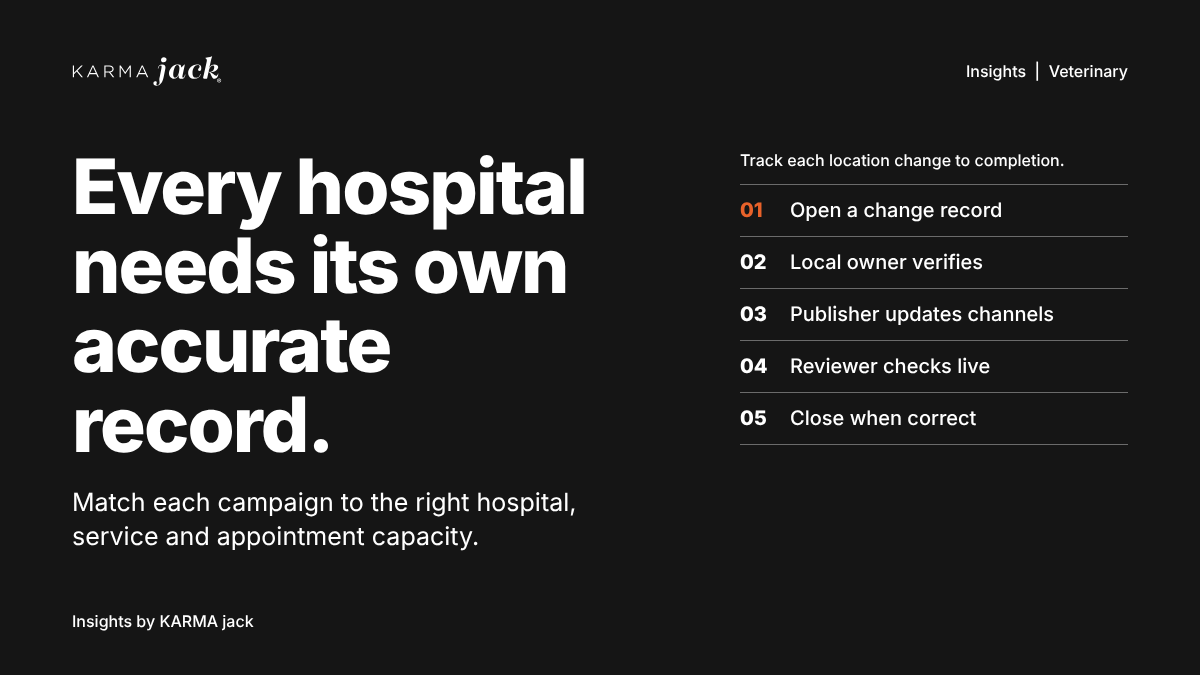
AI marketing for veterinary groups starts with location-level accuracy: each hospital needs current service, hours and appointment information that matches its actual capacity. A shared brand still needs a clear local next step.
AI can help organize information and draft local content. It cannot know that a hospital changed its hours yesterday unless someone updates the source. The foundation of useful multi-location marketing is a reliable record for each hospital and a clear owner for every change.
For a veterinary group’s operations and marketing leaders, the priority is matching each campaign to the right hospital, service and appointment capacity. Start with trustworthy location records, then connect local page changes and marketing spend to completed new-client visits.
What should a hospital location record include?
Maintain these fields for each hospital:
- Real-world name
- Address
- Phone
- Hours
- Appointment link
- Services
- Species treated
- Emergency arrangements
- Person who can confirm each field
- Date reviewed
Separate group-wide statements from local facts. A service offered at one site should not appear on every hospital page because it was included in a shared template.
Give operational changes a publishing path. When a clinician leaves, a location moves or a service pauses, the local team needs a simple way to notify whoever manages the website and listings.
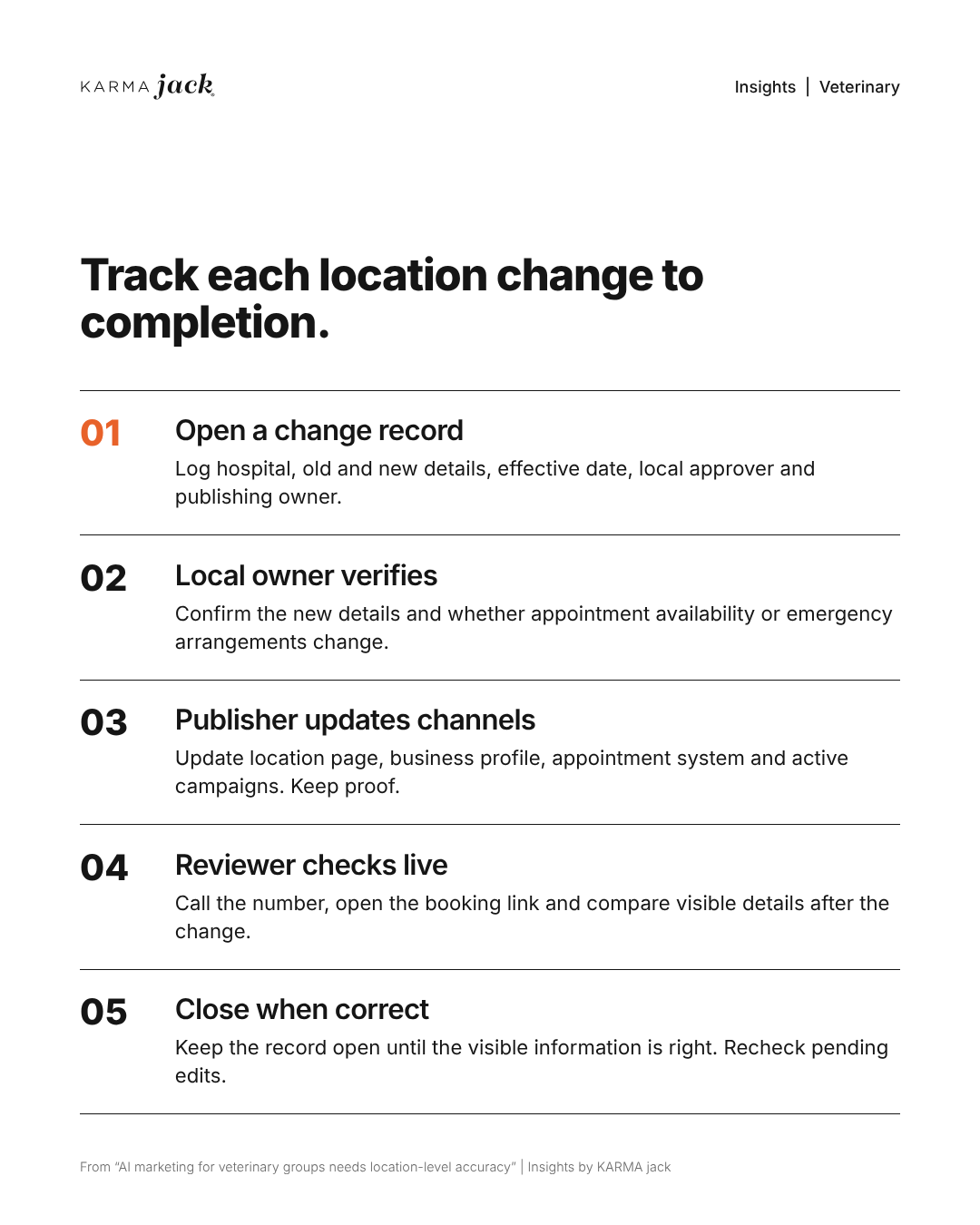
Track each location change to completion
For a hypothetical change in Saturday hours, open one change record with the hospital, old hours, approved new hours, effective date, local approver and publishing owner. Record the sources that need an update: location page, business profile, appointment system and any active campaign that mentions hours.
- Local owner: Verify the new hours and whether appointment availability or emergency arrangements also change.
- Publishing owner: Update the approved channels, record completion dates and keep a link or screenshot for each check.
- Reviewer: Call the published number, open the appointment link and compare the visible hours after the change takes effect. Recheck a pending profile edit rather than marking it complete at submission.
Keep the record open until the visible information is correct. This is a sample workflow, not a claim about a specific hospital or a promise that every platform updates immediately.
Keep profiles aligned with the real business
Google’s Business Profile guidelines require accurate representation of the business. Use the actual hospital identity rather than adding city names or keywords solely for search.
Review profiles alongside the website. Check that the phone and appointment route reach the correct hospital. Duplicate or outdated information can create a confusing experience even when the surrounding brand looks consistent.
A shared reporting system should make errors visible by location. A group average will not reveal that one hospital’s holiday hours are wrong.
Use AI to prepare local content, then verify it
Give the drafting system approved location facts and a defined purpose. Useful assignments include explaining the first-visit process, introducing a real team member or clarifying a service that is genuinely available at that site.
Require a local review of factual claims before publication. The reviewer should check services, credentials, hours, geography and the next step. A central editor can then check brand voice and readability.
Avoid publishing the same article with a different city name across dozens of pages. Each page should earn its place by answering a real local question or providing distinct hospital information.
Protect the relationship in reviews and replies
A central team can develop response principles, but the local practice should own the facts of an individual client interaction. Keep public replies respectful and avoid disclosing patient or client details.
AI can prepare a reply for review. It should never invent an explanation, claim that a manager called someone or promise a refund without authorization.
Use a consistent process for requesting honest reviews. Review quality comes from real experiences and useful feedback, not generated testimonials or a target number of glowing comments. Ask eligible clients for genuine feedback with neutral wording and have a person review replies before posting.
Allocate marketing around each hospital’s capacity
Ask the regional operations lead to maintain a weekly view of which hospitals accept new clients, which services have capacity and which appointment types need staff review. The marketing lead can use that view to select the right destination and message. Keep medical prioritization with the veterinary team.
A hospital accepting routine new-client visits may need a clear first-visit page and a locally targeted campaign. A hospital with a full routine schedule may need accurate availability information and a dependable request route. A specialty hospital may need referral instructions and records requirements. Sending all three audiences to a generic group page makes the next step harder.
Before launching a campaign, compare its service, species, location, hours and booking promise against the approved hospital record. Test the actual landing page and appointment route on a phone. Confirm that reception knows what the campaign says and has a process for inquiries that do not fit.
How should a veterinary group measure marketing by location?
A qualified inquiry should have a consistent definition across the group, such as a new client asking for an offered service for a species the hospital treats.
Define a small set of shared measures, such as qualified inquiries, completed new-client appointments and the accuracy of location information. Keep definitions consistent so comparisons mean something.
Interpret results in context. A hospital with limited appointment capacity has a different marketing problem from a new location building awareness. Connect campaign planning with the local team’s ability to serve demand.
For AI search checks, record the prompt, location context, date and observed result. Treat the output as a sample, then compare it with actual inquiry and appointment data. A citation alone is not a patient acquired.
Make the location report explain the next decision
Give each hospital a report with these fields:
- Reporting period
- Campaign spend where applicable
- Qualified new-client inquiries
- Confirmed appointments
- Completed appointments
- Available capacity
Keep returning-client activity separate. Record incomplete attribution instead of forcing every appointment into a channel.
Avoid ranking locations only by raw inquiry count. Different service mixes, operating hours and capacity make a league table misleading.
Use the report to choose an action. Many inquiries with few confirmed visits call for a review of fit, availability and reception follow-up. Confirmed visits with many cancellations call for a separate scheduling investigation. Few qualified inquiries at a hospital with capacity may justify testing its local page and targeting.
Pilot the reporting definition at a few different hospital types, reconcile it with reception records and resolve discrepancies before extending it. This is a recommended operating method, not a benchmark or a guarantee of growth.
Veterinary group marketing questions
When is a hospital-hours update actually finished?
When the approved information is visible and correct across the affected location page, profile, appointment system and campaign. A submitted profile edit still needs a live check before the change record closes.
Should every hospital in a group receive the same campaign?
Match the campaign to each hospital’s services, species, hours and capacity. A routine-care hospital, a full schedule and a referral service can require different messages and appointment routes.
How can a group avoid misleading comparisons between hospitals?
Use consistent definitions, then review service mix, hours and available capacity alongside inquiries and completed appointments. Keep returning-client activity and incomplete attribution separate. Raw lead volume alone can give a misleading comparison.
Centralize the standards and keep local ownership
Start with a small set of hospitals and test the update process. Resolve data conflicts and review delays before rolling the workflow across the group.
KARMA jack’s multi-location marketing services connect brand direction with location-level marketing. Talk with our team about a practical plan for your group.